
How to Evaluate a Yarn Tension Control Supplier
Choosing a yarn tension control supplier is rarely a narrow component decision. It affects fabric stability, loom speed, yarn break frequency, operator intervention, and maintenance planning across the production line.
In weaving, warp knitting, flat knitting, and other textile processes, poor tension control can quietly reduce output before defects become visible. That is why supplier evaluation needs to go beyond quotations.
A capable yarn tension control supplier should demonstrate process knowledge, repeatable engineering, and support that fits real factory conditions. The strongest option is usually the one that reduces instability over time, not simply the one with the lowest initial cost.
Why yarn tension control matters across textile production
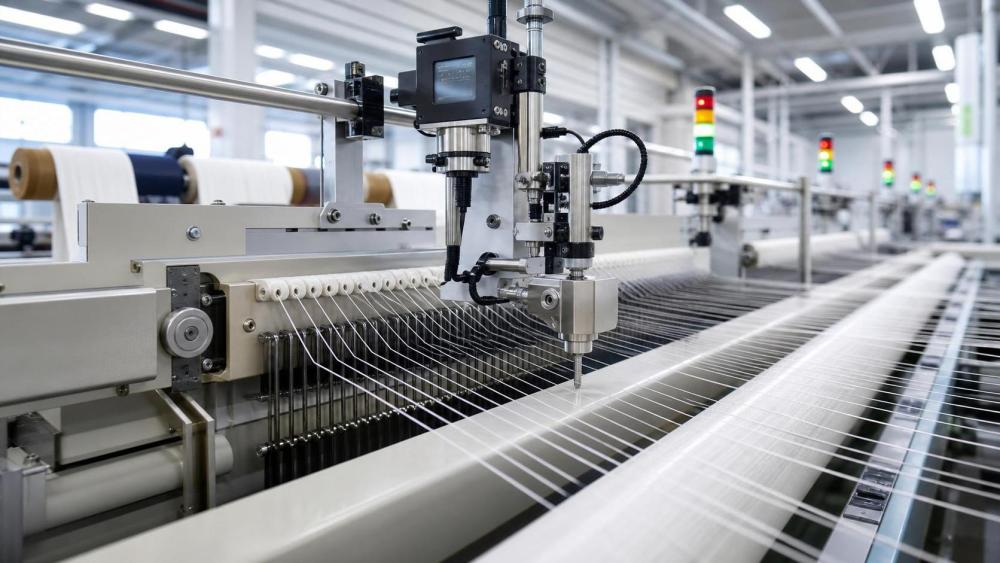
The role of yarn tension control is simple to describe but difficult to execute well. It keeps yarn feeding within a stable range while machine speed, yarn count, material behavior, and environmental conditions keep changing.
When tension varies too much, the problems spread quickly. Fabric stripes, loose loops, uneven selvage, yarn hairiness, breakage, and inconsistent hand feel can all follow.
In high-speed weaving systems, even small tension deviations can lower RPM efficiency. In knitting environments, they can affect loop formation, fabric elasticity, and downstream finishing quality.
This is why TMGS often frames yarn tension control within a broader machinery context. It connects with air-jet insertion, warp behavior, servo motion, machine stability, and digital monitoring rather than existing as an isolated accessory.
What defines a strong yarn tension control supplier
Not every supplier offering tension devices has the same technical depth. Some mainly trade standard parts. Others build systems that are matched to yarn type, machine architecture, and production targets.
A reliable yarn tension control supplier usually combines three capabilities. It understands textile process demands, controls product consistency, and supports installation with measurable performance criteria.
That distinction matters because tension control is application-sensitive. Cotton, filament, spandex blends, technical yarns, and recycled fibers behave differently under acceleration, friction, and humidity.
In practical sourcing work, the supplier should be evaluated as a process partner. The question is not only whether the device works, but whether it remains stable under real production pressure.
Core signals to review early
- Experience with air-jet looms, water-jet looms, rapier looms, warp knitting, or flat knitting applications.
- Evidence of stable performance at different speeds, yarn counts, and tension ranges.
- Ability to customize mounting, control logic, sensor response, or mechanical interfaces.
- Clear after-sales structure for spare parts, commissioning, troubleshooting, and upgrades.
Technical evaluation should come before price comparison
Price matters, but it should not be the first screening tool. A low-cost yarn tension control supplier can become expensive if production loss, fabric claims, and repeated machine stops begin to accumulate.
Technical review should focus on operating stability. Ask how the supplier measures tension consistency, compensates for speed changes, and handles different yarn surface conditions.
It is also useful to separate mechanical quality from control quality. A neat-looking assembly may still perform poorly if friction points drift, sensors react slowly, or calibration is difficult.
The best suppliers can explain performance in factory language. They discuss breakage reduction, tension variation control, fabric defect risk, cleaning cycles, and line integration without relying on vague claims.
Questions that reveal technical depth
Application experience is often the hidden differentiator
A yarn tension control supplier with broad textile references usually identifies risks faster. It understands that the same solution may behave differently on denim warp preparation, circular knitting, or lightweight technical fabric production.
This matters even more as mills and garment supply chains pursue shorter lead times. Machines are expected to switch styles faster, process mixed materials, and maintain quality with less tolerance for trial-and-error.
Suppliers with field experience can usually explain where instability begins. Sometimes the issue is not the tensioner itself, but yarn package condition, guide path design, vibration, or interaction with upstream feeding systems.
That diagnostic ability is valuable. It shortens commissioning, reduces blame-shifting, and gives clearer accountability when performance targets are discussed.
Useful reference areas
- High-speed weaving lines where RPM and yarn stability must improve together.
- Warp knitting systems with fine yarn handling and strict uniformity requirements.
- Computerized flat knitting setups where tension influences shape accuracy and repeatability.
- Factories processing recycled, stretch, coated, or technical yarns with unstable behavior.
Support, documentation, and customization deserve equal attention
Many sourcing decisions underestimate support quality. Yet with tension control systems, setup errors, delayed spare parts, or weak training can erase the value of a technically sound purchase.
A dependable yarn tension control supplier should provide documentation that is usable on the shop floor. That includes parameter guidance, maintenance intervals, fault logic, and replacement procedures.
Customization is another key issue. Machine frames, yarn paths, control cabinets, and operator habits vary widely. Standard products are useful, but many lines still require tailored brackets, sensors, or settings.
TMGS regularly highlights this wider reality in textile machinery sourcing. Integration quality often decides whether an automation component improves output or creates one more adjustment point.
Support indicators worth verifying
- Lead time for consumables, spare assemblies, and replacement sensors.
- Availability of remote troubleshooting or on-site commissioning support.
- Clarity of drawings, manuals, calibration steps, and maintenance records.
- Willingness to define performance targets before order confirmation.
A practical framework for comparing suppliers
A structured comparison avoids overreliance on sales presentations. It helps convert broad claims into measurable criteria tied to plant performance.
One effective approach is to score each yarn tension control supplier across technical fit, application references, service readiness, integration risk, and total operating cost.
This comparison becomes stronger when based on one or two real production cases. Match the review to actual yarn types, target speed, expected fabric quality, and maintenance capability.
If the supplier cannot define likely results under those conditions, the proposal is still too generic. Good evaluation depends on narrowing the gap between brochure language and production evidence.
What to do before making the final choice
Before selecting a yarn tension control supplier, it helps to document the operating environment clearly. List yarn materials, count range, machine models, running speed, defect concerns, and service expectations.
Then compare suppliers against those conditions rather than against each other in the abstract. A smaller specialist may outperform a larger vendor if the application fit is sharper.
It is also worth reviewing how the supplier communicates. Technical clarity, realistic limitations, and willingness to discuss risk usually signal a more dependable long-term partner.
The most useful next step is to build a short evaluation sheet, test claims against real production scenarios, and use industry intelligence sources such as TMGS to benchmark supplier positioning, technology depth, and market credibility.
A well-chosen yarn tension control supplier should strengthen consistency, not add uncertainty. That is the standard that makes the final decision easier and more defensible.
Related News
- Warp Knitting Yarn Tension Management: Common Faults and FixesJul 25, 2026Yarn Topology Scientist
- Yarn Tension Management Sensors: What Drift Means for Fabric QualityJul 07, 2026Yarn Topology Scientist
- Broken Yarn Detection: How to Cut Stops and Find Root Causes FasterJul 05, 2026Yarn Topology Scientist
- Yarn Tension Control Price Guide: What Drives CostJun 26, 2026Yarn Topology Scientist