
How Seamless Apparel Knitting Cuts Sportswear Waste
Why Waste Reduction Has Become a Sportswear Priority
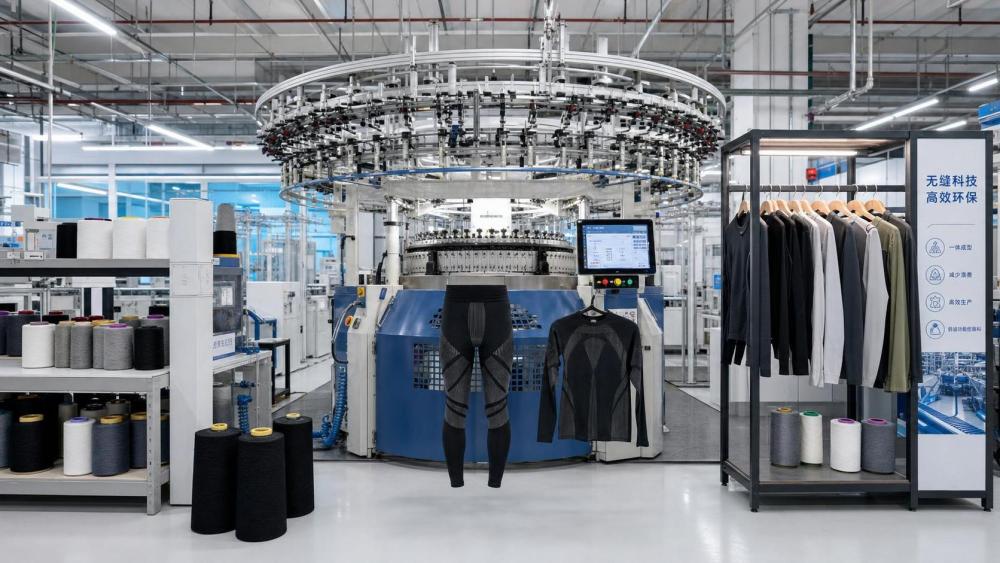
For sportswear producers, waste is no longer a side issue. It affects margin, lead time, compliance, and brand credibility at the same time.
That is why seamless apparel knitting for sportswear is getting serious attention across sourcing, operations, and factory upgrade decisions.
Traditional cut-and-sew production creates waste at several points. Fabric rolls must be spread, cut, bundled, moved, sewn, checked, and reworked.
Each step adds material loss, labor dependence, and quality variation. In performance apparel, those hidden losses become expensive very quickly.
Seamless apparel knitting for sportswear changes that logic. It builds the garment closer to its final form, which reduces offcuts and unnecessary handling.
This also supports a broader shift in manufacturing. Buyers want smaller runs, faster replenishment, and more technical garments with fewer production risks.
From a business perspective, the question is not only whether the technology works. It is whether it solves measurable factory problems.
In many cases, it does. Waste drops because less fabric is cut away. Process time drops because there are fewer sewing operations.
More importantly, seamless apparel knitting for sportswear helps align cost control with sustainability goals, which is where many investment decisions now converge.
How Seamless Apparel Knitting for Sportswear Works
At its core, seamless knitting uses computerized circular or flat knitting systems to create shaped garments with minimal post-processing.
Instead of cutting pattern pieces from larger fabric panels, the machine forms zones, structures, and dimensions directly during knitting.
That means mesh areas, compression zones, rib structures, ventilation channels, and stretch control can be engineered inside one production flow.
For sports bras, base layers, leggings, and training tops, this matters a lot. Performance features are built in, not added later through complex assembly.
In practical terms, seamless apparel knitting for sportswear reduces the number of components a factory needs to manage.
Fewer panels mean fewer sewing lines, fewer chances for alignment mistakes, and fewer weak points caused by seam concentration.
It also shortens the path from digital design to sample approval. Pattern revision happens in the program, not through repeated cutting adjustments.
For factories serving fast-moving brands, that flexibility becomes a strong operational advantage, especially when style turnover is high.
Where the Waste Reduction Comes From
The waste savings from seamless apparel knitting for sportswear come from several sources, not just one obvious improvement.
- Less cutting waste because garments are knitted to shape.
- Lower defect rates from fewer sewing and joining operations.
- Reduced work-in-progress movement between departments.
- Less rework caused by seam mismatch or panel distortion.
- Better yarn utilization through digital program control.
When these factors are combined, the material and labor effect becomes more visible than many first-time buyers expect.
Why It Fits Modern Sportswear Manufacturing
Recent market changes have made seamless apparel knitting for sportswear more relevant than before.
Sportswear brands are asking for more functional variation in fewer units. They want support zones, body mapping, and comfort without extra development time.
At the same time, sustainability reporting is becoming more detailed. Factories must explain not only output, but also waste, water, energy, and traceability.
This is where seamless apparel knitting for sportswear becomes a practical solution rather than a branding story.
It supports leaner production for categories where fit, stretch, and skin comfort are critical. That includes yoga wear, running layers, gym tops, and compression basics.
Another advantage is speed. Because there are fewer downstream operations, factories can react faster to replenishment orders and style updates.
For decision-makers comparing equipment investments, this combination of waste reduction, agility, and product differentiation is hard to ignore.
Typical Sportswear Categories That Benefit Most
- Seamless leggings with body-mapped support zones.
- Training tops with integrated ventilation structures.
- Base layers for running, cycling, and outdoor use.
- Sports bras that need stretch control and comfort.
- Compression garments with engineered fit consistency.
Key Operational Benefits Beyond Material Savings
Waste reduction usually starts the conversation. It should not end there.
Seamless apparel knitting for sportswear can also improve process stability, planning visibility, and quality performance across the line.
Because fewer operations are involved, labor balancing becomes easier. That matters in regions where skilled sewing labor is harder to recruit or retain.
Quality control also becomes more focused. Teams can monitor yarn input, machine settings, and garment dimensions with fewer handoff points.
There is also a brand-side benefit. Seamless garments often deliver better comfort because they reduce friction points and bulky seam construction.
That user experience can strengthen sell-through, especially in premium activewear where fit and feel drive repeat buying.
So while seamless apparel knitting for sportswear begins as a production choice, it often creates commercial value as well.
A Simple Decision Lens
What to Check Before Investing
Like any technology, seamless apparel knitting for sportswear works best when the business case is realistic.
A common mistake is focusing only on machine speed. Speed matters, but total process compatibility matters more.
Start with product mix. If the factory mainly produces simple woven items, seamless equipment may not solve the biggest bottleneck.
If the business is growing in leggings, base layers, shapewear, or technical activewear, the fit is usually stronger.
Next, review digital capability. Seamless knitting depends on programming accuracy, yarn selection, and machine parameter discipline.
Training is therefore essential. Without proper development skills, even advanced machines will underperform.
It is also worth checking how the new system fits with inspection, finishing, packing, and order planning workflows.
In actual operations, returns often improve when seamless apparel knitting for sportswear is part of a broader modernization strategy.
That could include yarn control, digital sampling, AI inspection, and better production data tracking.
The strongest results usually come from system thinking, not stand-alone machine buying.
Practical Evaluation Checklist
- Map current fabric waste by style and process step.
- Identify sportswear styles suitable for seamless conversion.
- Compare yarn costs against cut-and-sew material losses.
- Review programming, maintenance, and operator training needs.
- Test sample quality, fit repeatability, and production stability.
- Measure ROI using labor, waste, lead time, and defect reduction.
A Smarter Route to Lower Waste and Better Agility
Seamless apparel knitting for sportswear is not a niche idea anymore. It is becoming a practical route to cleaner and faster production.
Its value comes from combining several gains at once. Factories can reduce fabric waste, simplify assembly, improve consistency, and support functional garment design.
For companies facing pressure on cost, responsiveness, and sustainability, that mix is highly relevant.
The key is to evaluate seamless apparel knitting for sportswear with real production data, not just machine specifications.
Look at style suitability, labor structure, waste levels, sampling speed, and downstream process impact.
When those factors are aligned, seamless systems can do more than cut waste. They can reshape how sportswear is planned, made, and delivered.
That is why now is a good time to review whether seamless apparel knitting for sportswear fits your next production upgrade.
A focused pilot, backed by measurable targets, is often the best first step toward a stronger and more efficient sportswear operation.
Related News
- When does seamless garment technology reduce production waste?Sep 14, 2026Yarn Topology Scientist
- What support should a seamless knitting systems supplier provide after installation?Sep 10, 2026Yarn Topology Scientist
- How closed loop knitting software reduces yarn waste in productionAug 30, 2026Yarn Topology Scientist
- What drives seamless garment technology price in large-volume production?Aug 20, 2026Yarn Topology Scientist